

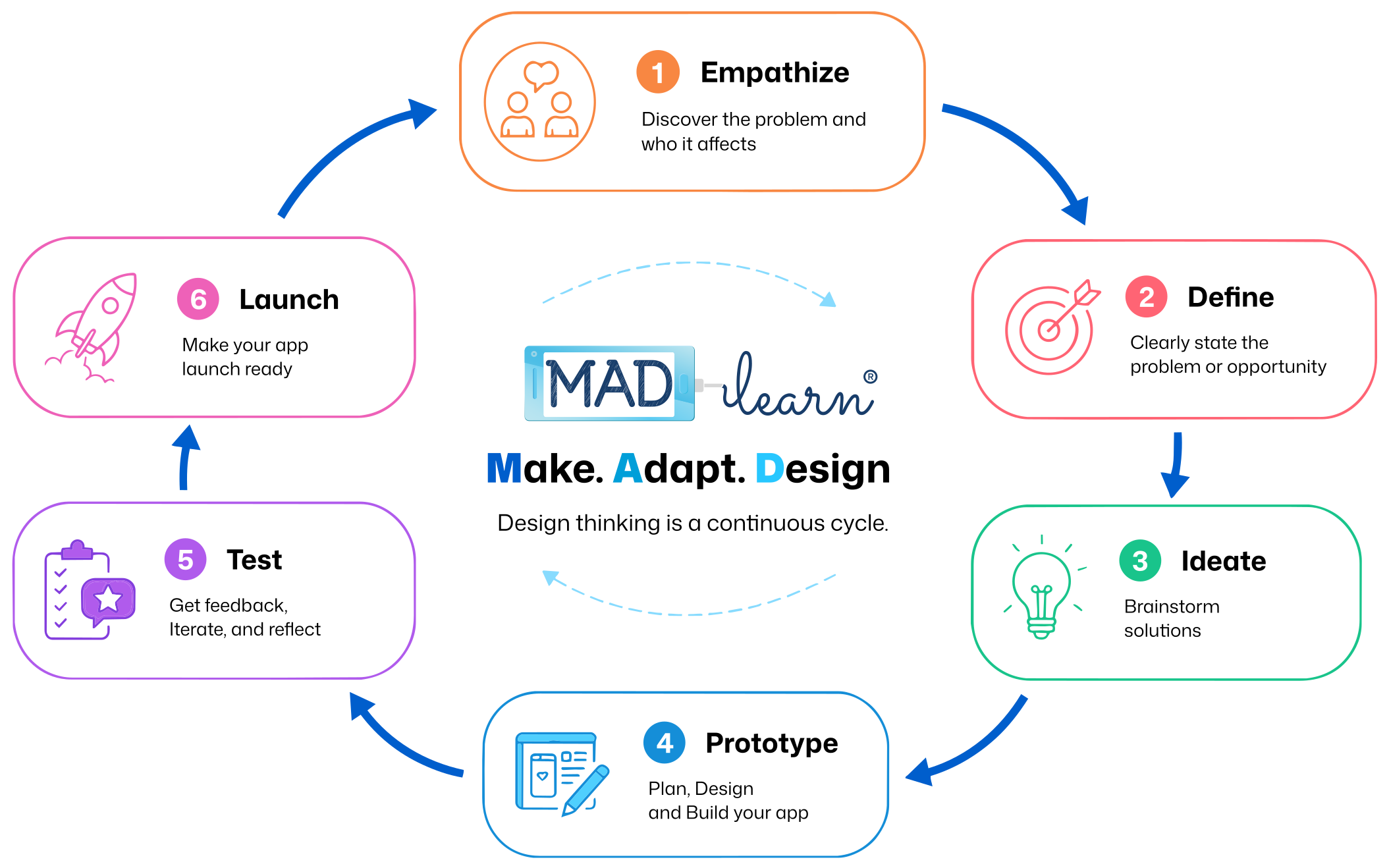
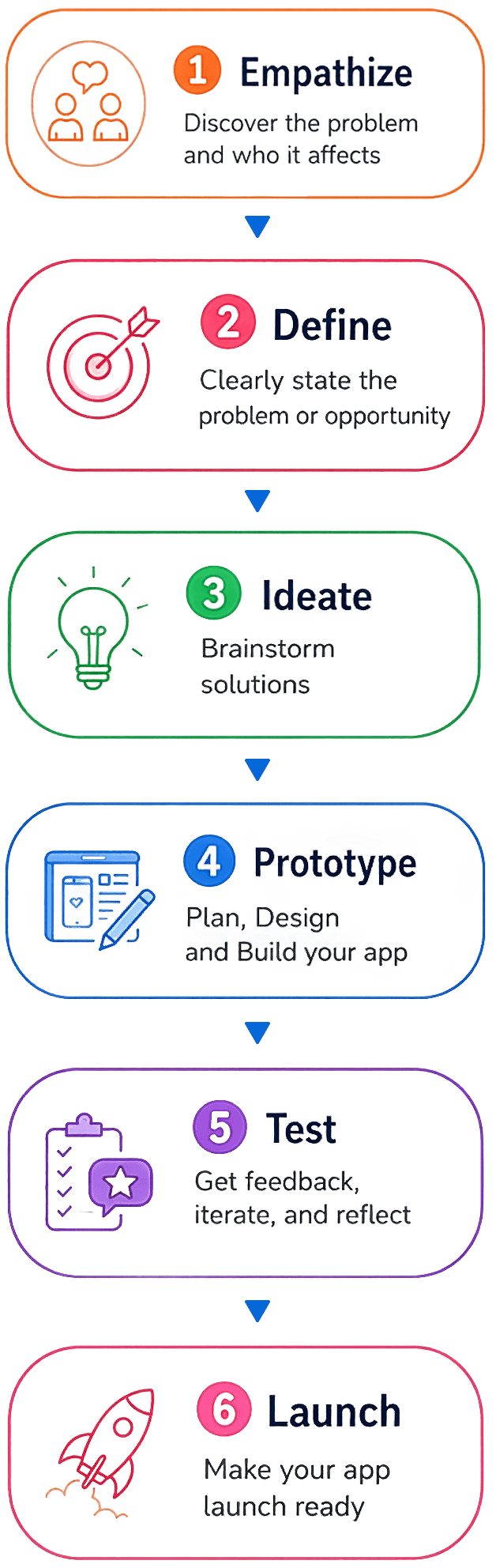
MAD-learn’s embedded curriculum is centered on the research-based Stanford design thinking process, giving learners the skills to identify problems (...and opportunities or needs), create meaningful solutions, and bring their ideas to life, whether they’re in the classroom, makerspace, field or anywhere in between.

Design thinking isn’t just for tech experts. It’s integral to every subject, whether you’re in 3rd grade or beyond the classroom. MAD-learn’s design thinking tools empower creators of all skill levels and backgrounds to solve real-world challenges, needs or explore opportunities, turning curious minds into confident problem-solvers. Flexible pathways make MAD-learn ideal for K-12 classrooms, districts, libraries, museums, youth programs and more.


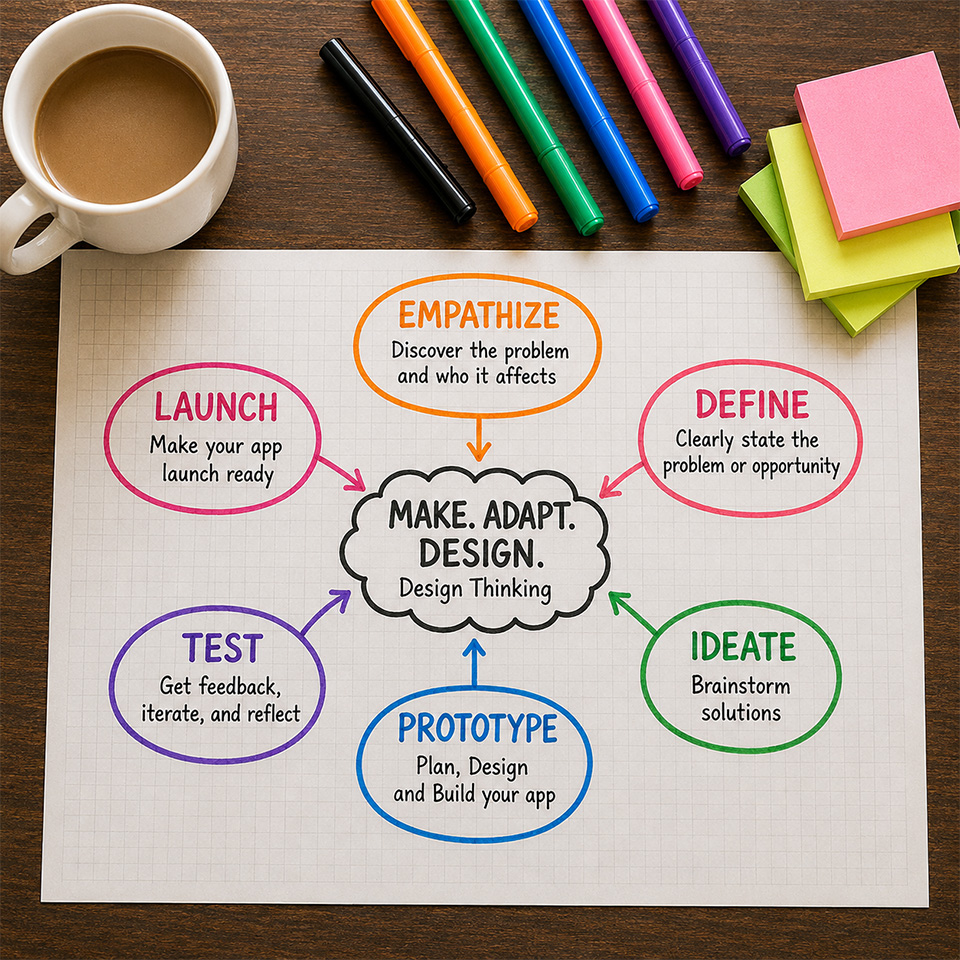

"[Students] can grow with the app. There's never an end to their ideas, and [there's] never an end to the design process. It's a continuous circle that just keeps going."


Differentiated instruction for students in grades 3-12 to meet the needs of diverse learners.
| Level | Grade Band | Reading / Writing Demand | Scaffolding | Vocabulary | Best For |
|---|---|---|---|---|---|
|
Level 1: Explorer
|
Grades 3–6 | Short answers, sentence starters, fill-in-the-blank. Drawing accepted alongside writing. | Adult or teacher likely co-facilitates each step. | Everyday words only (no "iterate," "prototype," "call to action," etc.) | First exposure to design thinking; whole-class or small-group facilitation. |
|
Level 2: Builder
|
Grades 7–9 | Full sentences expected; moderate free writing; sentence starters optional/removable. | Pairs or small groups, periodic teacher check-ins. | Introduces core DT terms with plain-language definitions built in. | Students with some independence but who still need concrete examples and shorter guides. |
|
Level 3: Innovator
|
Grades 10–12 | Open-ended writing, multi-part reflection, self-directed AI help. | Students work independently across a full project cycle. | Full DT vocabulary used without definitions. | Students ready to run the full process with minimal support. |